There is a quiet shift happening in climate technology. For years, the focus was on factories, smokestacks, and cutting emissions at the source. But a new wave of companies is asking a different question: what if we could remove carbon that is already in the atmosphere—and do it using land, soil, and farmers?
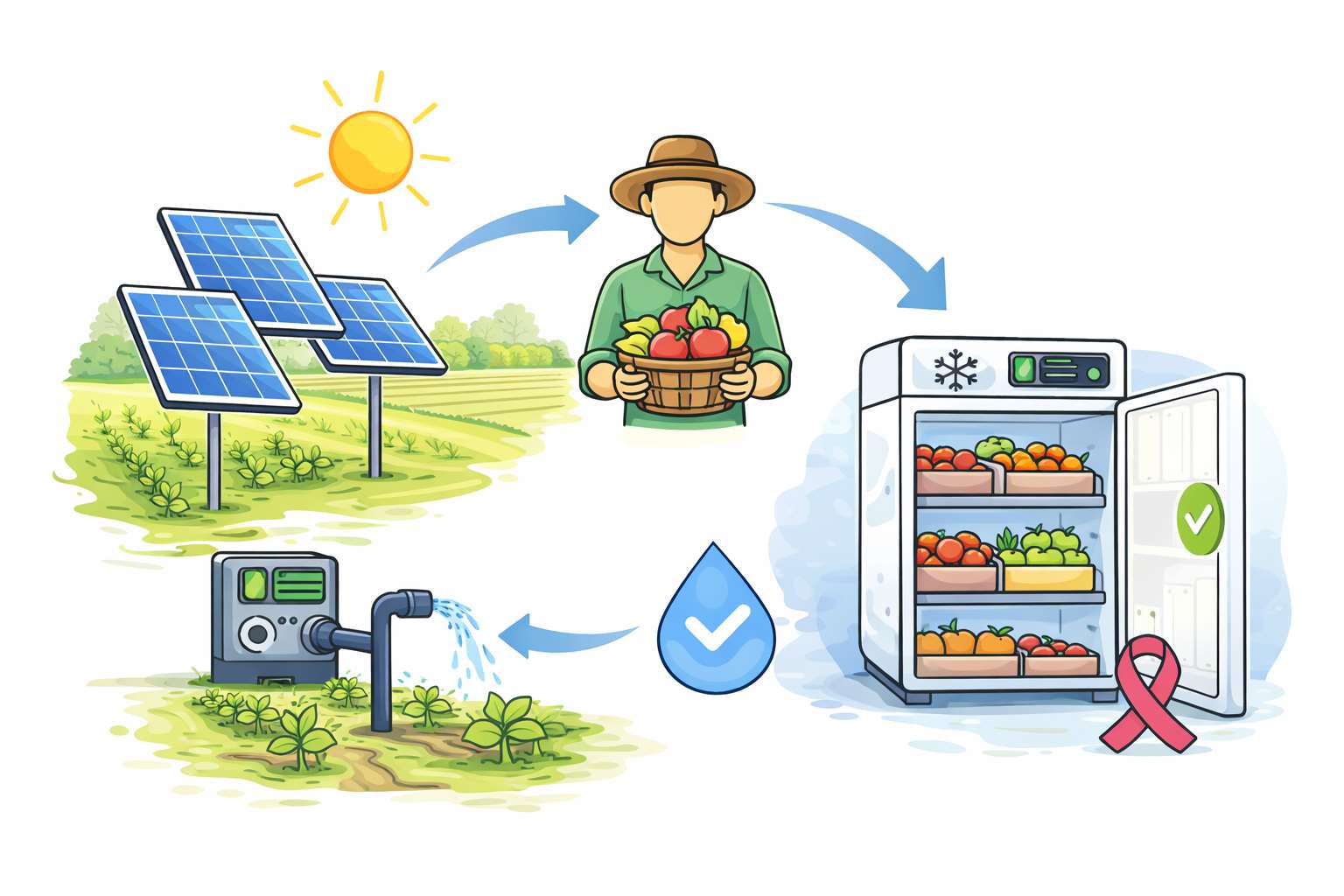
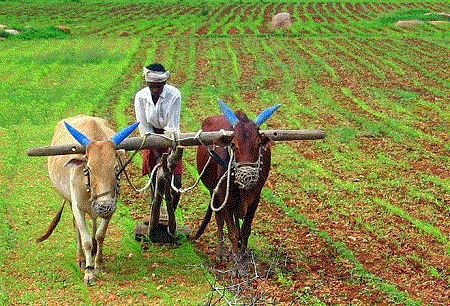
Varaha sits right at the center of this shift. It is not building machines in industrial zones. It is working with smallholder farmers across rural landscapes, turning everyday agricultural practices into a climate solution.
The origin: climate action through the soil
Varaha was founded in 2022 by Madhur Jain, Ankita Garg, and Vishal Kuchanur. The founding idea was deceptively simple: farmers already manage vast amounts of land. If their practices change—even slightly—the impact on carbon emissions could be massive.
But the reality they encountered was more complex. Smallholder farmers, especially in India and other emerging markets, operate under tight margins. Asking them to adopt sustainable practices without financial incentives rarely works.
This is where Varaha’s core insight emerged: climate action must pay.
Instead of treating sustainability as a cost, the company treats it as an income stream. Farmers adopt regenerative practices, and in return, they earn from carbon credits generated by those practices.
What Varaha actually does
At its core, Varaha is a carbon project developer. But that label hides a layered system.
The company works with farmers to implement practices like regenerative agriculture, agroforestry, and biochar production. These methods either reduce emissions or actively remove carbon dioxide from the atmosphere and store it in soil or biomass.
Here is where the system becomes interesting. Varaha measures how much carbon is being removed or stored, converts that into verified carbon credits, and sells those credits to companies looking to offset their emissions.
In simple terms:
farmers change how they farm → carbon is captured → that carbon is quantified → companies pay for it → farmers earn.
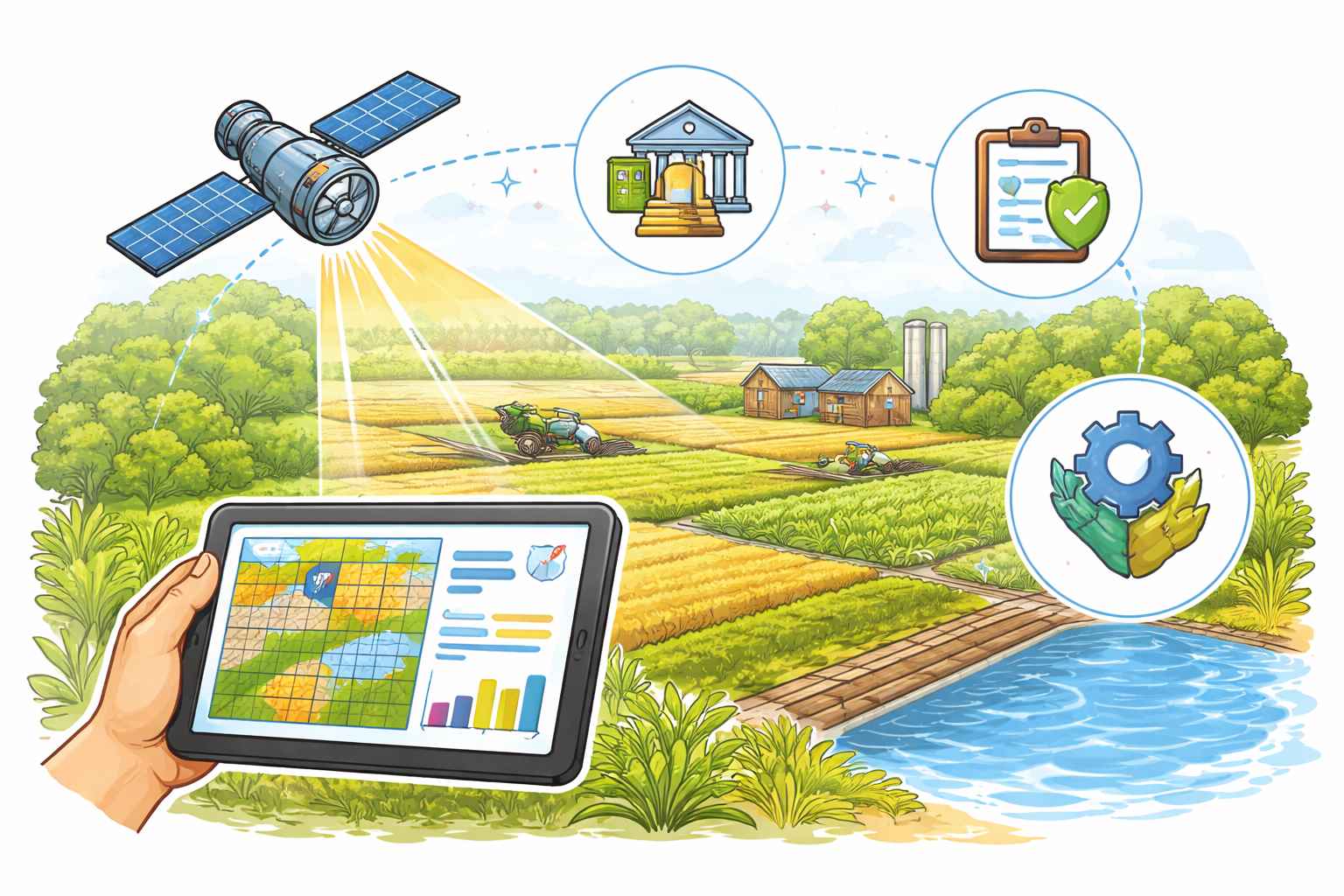
The “tech” in this process is not always visible. Varaha uses remote sensing, machine learning, and soil modelling to verify that carbon removal is real and measurable. This is crucial because carbon markets depend on trust. If you cannot prove that carbon has actually been removed, the entire system collapses.
Growth, funding, and scale
Despite being a relatively young company, Varaha has scaled quickly. It operates across South Asia and parts of Africa, with multiple carbon projects already underway.
The company has raised significant funding, including a $45 million round led by WestBridge Capital, along with additional investments tied to specific projects.
It has also attracted large institutional and corporate buyers. Deals with companies like Microsoft and Google signal something important: global demand for carbon removal is real and growing. One notable agreement involves supplying over 100,000 tons of carbon removal credits through biochar projects over several years.
Beyond funding, the scale on the ground is equally telling. Varaha has worked with tens of thousands of farmers and covered hundreds of thousands of acres, removing millions of tonnes of carbon dioxide.
What makes the model unique
Many climate tech companies focus on high-tech solutions like direct air capture machines. Varaha goes in the opposite direction—it builds on nature.
First, it uses nature-based solutions. Practices like agroforestry and regenerative farming are not new. What is new is treating them as measurable climate interventions.
Second, it creates a financial bridge. Carbon credits become the mechanism through which global corporations pay rural farmers.
Third, it builds a verification layer. Using technology, Varaha ensures that carbon removal is real, trackable, and standardised.
This combination turns something traditionally invisible—soil carbon—into something tradable.
Pilots, performance, and real-world outcomes
Varaha’s projects span multiple pathways. In agroforestry initiatives, farmers plant trees alongside crops, improving biodiversity and long-term income.
In biochar projects, agricultural waste is converted into a charcoal-like substance that locks carbon into the soil for long periods.
In regenerative agriculture, farmers adopt practices like reduced tilling and better crop rotation, which increase soil carbon levels.
These are not just environmental interventions. They have practical benefits. Farmers often see improved soil fertility, reduced input costs, and additional income streams.
Market feedback reflects this dual value. Corporates value high-quality, verifiable carbon credits. Farmers value predictable additional income.
There are also challenges. Carbon markets are still evolving. Questions around permanence—how long carbon stays stored—and verification standards remain active debates globally.
Varaha operates within this uncertainty, which makes its verification systems even more critical.
The broader landscape and competitors
In India, there are relatively few direct peers operating at the same scale in carbon removal through agriculture. However, adjacent players include companies working in carbon markets, regenerative agriculture, and climate finance.
Globally, the space is more crowded. Companies are exploring different approaches to carbon removal—from direct air capture to ocean-based solutions.
But nature-based solutions remain one of the most scalable and cost-effective approaches, especially in regions with large agricultural bases.
Varaha’s differentiation lies in its focus on smallholder systems, which are often overlooked but collectively massive.
The global context: why this matters
The idea behind Varaha connects to a larger concept known as Carbon dioxide removal. This refers to removing carbon from the atmosphere and storing it in long-term sinks like soil, forests, or geological formations.
Experts agree that reducing emissions alone is not enough. Some carbon will need to be actively removed to reach global climate goals.
This is where companies like Varaha come in. They make carbon removal not just possible, but scalable.
The gap it fills
If you step back, the gap is surprisingly clear. There is a growing demand from companies to offset emissions. There is also a massive, underutilised resource—farmland—that can store carbon. What is missing is the bridge between the two. Varaha builds that bridge.
Our correspondent