Most recycling problems do not begin at the landfill. They begin much earlier—on the sorting belt.
A PET bottle mixed with PVC, colored plastic inside a clear PET stream, black plastic that standard optical sorters cannot detect, or mixed dry waste handled manually in unsafe conditions—these are the small failures that make recycling expensive and often unprofitable. Ishitva Robotic Systems was built to solve exactly that problem.
Based in Ahmedabad, the company develops AI-powered sorting systems that help recyclers, waste processors, and material recovery facilities separate waste more accurately and at industrial scale. Instead of relying mainly on manual sorting or basic optical machines, Ishitva uses machine vision, hyperspectral sensing, AI, and pneumatic sorting to identify what material is actually moving on the belt—and then sort it automatically.
Its work sits in one of the least glamorous but most important parts of climate technology: making recycling commercially viable.
Founders
Ishitva Robotic Systems was founded in 2018 in Ahmedabad by Sandip Singh and Jitesh Dadlani.
What the product actually does
Ishitva does not sell one machine. It builds a set of industrial sorting systems for plastics, municipal waste, food, metals, and industrial recovery.
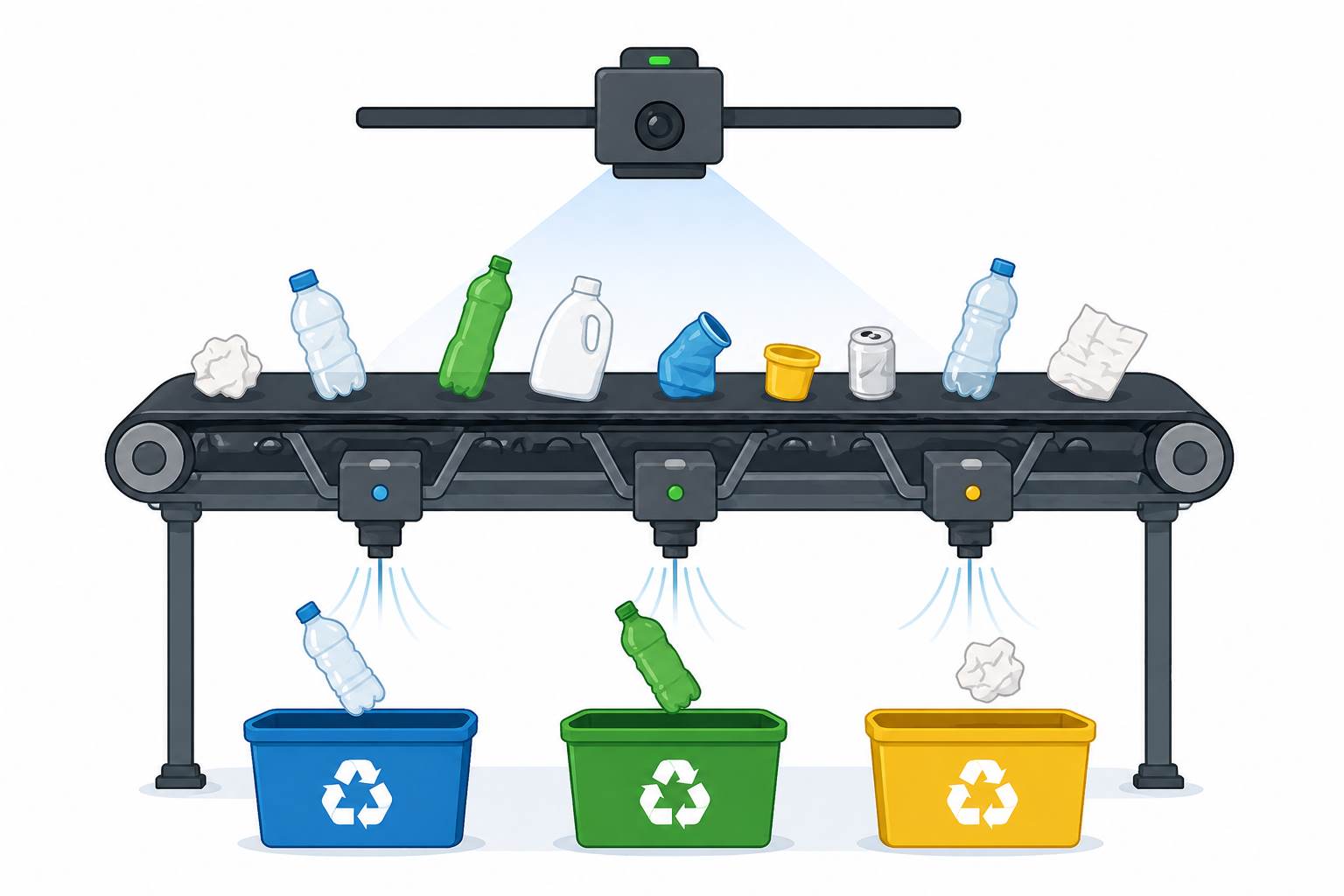
SUKA® is its flagship AI-powered air sorter. It identifies materials by polymer type, color, brand, size, and even black plastics, then uses pneumatic air jets to push them into the correct output stream. This matters because black plastics are difficult for many conventional optical sorters to detect.
Netra is the machine vision system behind that process. It scans mixed waste moving on conveyor belts and identifies recyclable materials accurately enough for industrial recovery . SUKA builds on Netra by combining that identification with high-speed acceleration and sorting valves. SANJIVANI® is larger in ambition. It is India’s first autonomous Material Recovery Facility (MRF), designed to sort mixed municipal waste at plant scale rather than only one stream at a time.
The Flake Analyzer and Flake Sorter work later in the chain, after plastics are shredded. These systems detect hidden contamination—foreign polymers, off-colors, black flakes, PVC contamination—at PPM (parts per million) levels using NIR, UV, hyperspectral vision, and AI. This is especially important for food-grade recycled PET, where even tiny contamination can make the output commercially unusable.
How the system works
Traditional sorting depends on people standing beside conveyor belts, visually identifying waste and separating it manually. It is slow, inconsistent, and often unsafe. Ishitva replaces that with sensor-based decision making.
Materials move under a combined vision system using near-infrared sensors, UV sensing, hyperspectral cameras, and color imaging. The AI model identifies what the material is, how contaminated it is, and whether it can be recovered for higher-value recycling. Once classified, the machine uses air-based separation or robotic sorting to move it into the correct stream. The company says its systems can detect more than 80 categories of recyclables in municipal waste streams.
This changes the economics of recycling. Instead of low-value mixed waste, recyclers can produce higher-purity outputs suitable for food-grade reuse and brand-level compliance.
Funding
In 2021, Ishitva raised more than $1 million in a Pre-Series A round led by Inflection Point Ventures, with participation from strategic investors.
It later became part of Marico Innovation Foundation’s Scale-Up program, a no-equity accelerator focused on operational growth. In 2023, Ishitva also won Marico Innovation Foundation’s Innovation for India Award in the Business category.
Competition
Ishitva competes in industrial recycling infrastructure, not consumer waste management. In India, companies like Recykal and Banyan Nation work in adjacent spaces such as recycling networks and circular plastics. Its closer technical competition comes from global industrial sorting players like TOMRA, Pellenc ST, and Bühler, which also use sensor-based sorting systems.
What makes Ishitva different is its India-first focus. Instead of importing expensive European systems, it builds around Indian waste realities—mixed streams, decentralized recyclers, and labor-heavy operations.
The real tech-for-good angle
The strongest social impact case for Ishitva is not awareness. It is dignity. Manual sorting often means workers standing in unsafe environments handling mixed waste directly, exposed to contamination, poor conditions, and low wages. Automation here is not only about efficiency. It is about reducing unsafe human contact with waste while creating better jobs around operations, maintenance, and quality control.
Cleaner sorting also means more food-grade recycled plastic, less landfill waste, less burning of dry waste, and stronger recycler economics. In short, Ishitva does not make recycling look better. It makes recycling work better.
- Our correspondent