In many parts of India, diagnosing respiratory diseases still depends on access to doctors, diagnostic equipment, and labs that are often far away from where patients live.
Conditions like tuberculosis, asthma, COPD, and even early-stage COVID-19 frequently go undetected until symptoms become severe. Salcit Technologies was built around a simple but powerful idea: what if a person’s cough could be used as a first-level diagnostic signal?
The company’s core product, Swaasa AI, does exactly that. It uses artificial intelligence to analyze cough sounds and identify patterns associated with different respiratory conditions. The goal is not to replace doctors, but to create a fast, low-cost screening layer that works even in low-resource settings.
Origins
Salcit Technologies was founded in 2017 by a group of engineers and researchers with backgrounds in signal processing, machine learning, and healthcare systems. The founding team includes Abhishek Kumar and Shashwat Kumar, who had previously worked on audio analytics and saw an opportunity to apply similar techniques to healthcare.
Their early insight was straightforward: cough is not just noise. It carries structured acoustic information shaped by the lungs, airways, and throat. Different diseases subtly alter this sound. If these patterns could be captured and decoded, cough could become a scalable diagnostic input.
The team began by collecting large datasets of cough sounds from patients across different conditions. This data became the foundation for training machine learning models that could distinguish between healthy and pathological coughs.
Product
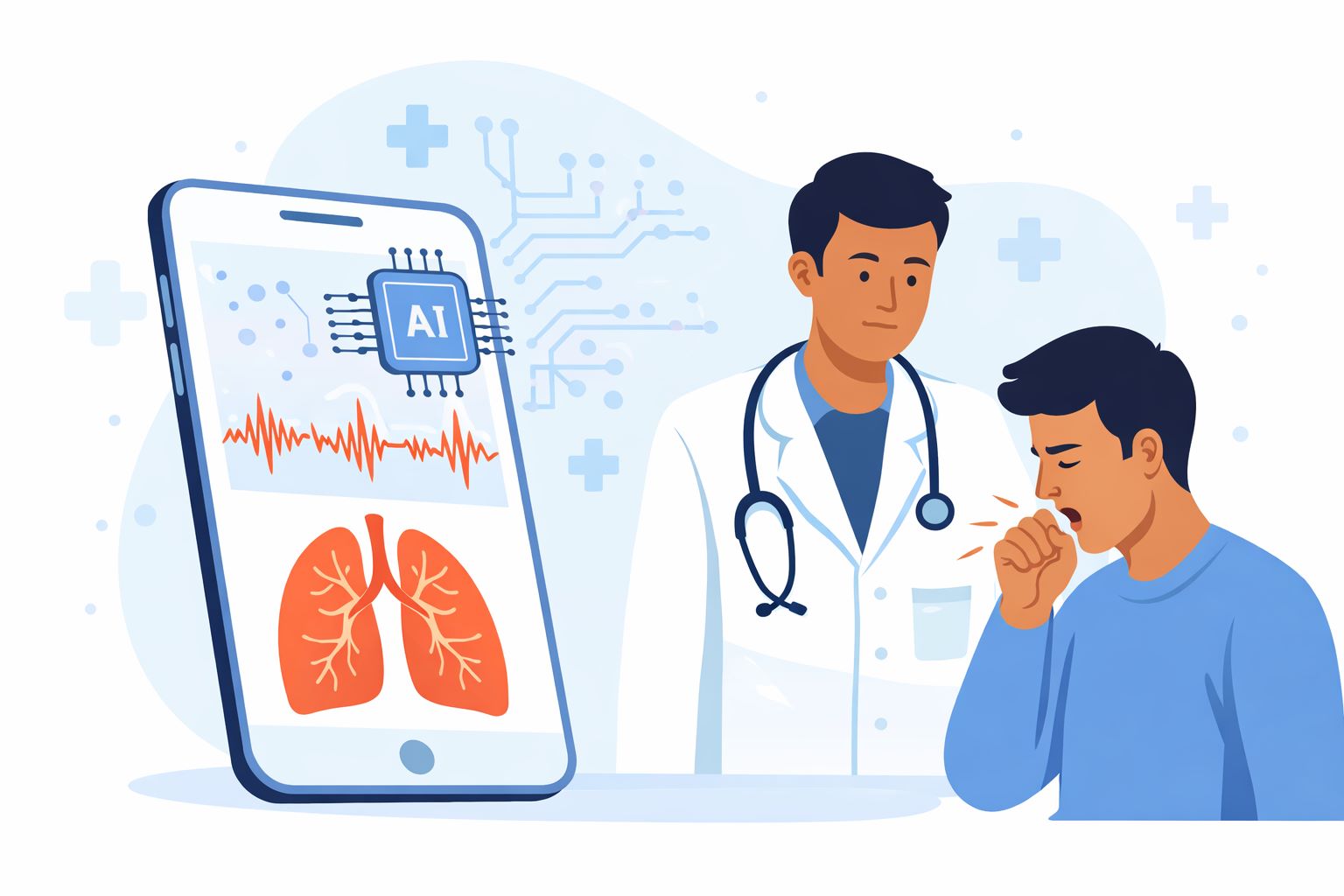
Swaasa AI is essentially a software-based screening tool that runs on smartphones or simple recording devices. A user is asked to cough into the microphone for a few seconds. The system records this audio and processes it using trained AI models.
The output is a risk assessment for specific respiratory conditions. For example, the system can indicate whether a cough pattern resembles that of tuberculosis or other chronic respiratory diseases. This happens within seconds, without requiring lab tests, imaging, or physical infrastructure.
What makes this approach useful is its simplicity. It does not require blood samples, sputum tests, or radiology. This makes it particularly relevant in rural areas, primary health centers, and large-scale screening programs where speed and cost matter.
How It Works
At a technical level, Swaasa AI converts cough audio into a set of features that describe frequency, amplitude, duration, and other acoustic properties. These features are then passed through machine learning models trained on labeled datasets of cough sounds.
The system looks for patterns that correlate with known disease signatures. For instance, a tuberculosis-related cough may have a different temporal and spectral pattern compared to a healthy cough or one caused by a mild infection.
The process is designed to be robust to environmental noise and variations in recording devices. This is important because the system is meant to work in real-world conditions, not controlled lab environments.
The output is not a definitive diagnosis. Instead, it acts as a triage tool. If the system flags a high risk, the individual can be referred for confirmatory testing. This helps prioritize limited medical resources.
Deployments
Swaasa AI has been tested and deployed across multiple settings, including hospitals, screening camps, and public health initiatives. One of its key use cases has been tuberculosis screening, especially in areas where access to diagnostic labs is limited.
During the COVID-19 pandemic, the platform was also adapted to screen for COVID-related cough patterns. This expanded its visibility and demonstrated how quickly the system could be retrained for new respiratory conditions.
In terms of performance, the company has reported high sensitivity levels in identifying certain respiratory diseases in controlled studies. While exact numbers vary depending on the dataset and condition, the system has shown promise as a rapid screening tool.
Feedback
Feedback from healthcare providers has generally focused on usability and speed. The ability to conduct screening in seconds without specialized equipment is seen as a major advantage.
However, there are also practical considerations. Clinicians are cautious about over-reliance on AI-based screening without confirmatory tests. As a result, Swaasa is typically positioned as a first step in the diagnostic pathway, not the final decision-maker.
From a public health perspective, tools like Swaasa are useful for large-scale programs where identifying potential cases early can reduce disease spread and improve outcomes.
Funding
Salcit Technologies has raised funding from a mix of investors, including early-stage venture funds and strategic backers interested in healthcare innovation. While the company has not been as heavily funded as some consumer health startups, it has focused on building clinical validation and partnerships.
Its growth strategy has leaned toward institutional deployments rather than direct-to-consumer scaling. This includes collaborations with hospitals, government programs, and global health organizations.
Competition
The idea of using sound for diagnosis is not unique to Salcit, but it is still an emerging field. Companies like ResApp Health (acquired by Pfizer) have worked on similar cough-based diagnostics.
Other players are exploring adjacent approaches, such as using smartphone sensors, wearable devices, or voice analysis to detect health conditions. However, cough analysis remains one of the more direct signals for respiratory diseases.
In India, the ecosystem is still relatively small, with a few startups and research groups working on similar problems. Salcit has been one of the more visible names due to its focus on tuberculosis and large-scale screening.
Global context
Globally, there is increasing interest in non-invasive, software-driven diagnostics. This includes everything from AI-based imaging analysis to digital biomarkers derived from voice, movement, and physiological signals.
Respiratory diseases remain a major global burden, particularly in low- and middle-income countries. Tuberculosis alone continues to affect millions of people each year. Traditional diagnostic methods, while accurate, are often slow and resource-intensive.
This creates space for tools like Swaasa AI that can act as a first layer of screening. The combination of smartphones, cloud computing, and machine learning makes it possible to deploy such tools at scale.
At the same time, regulatory approval and clinical validation remain critical challenges. For these systems to be widely adopted, they need to demonstrate consistent performance across diverse populations and settings.
- Our Correspondent