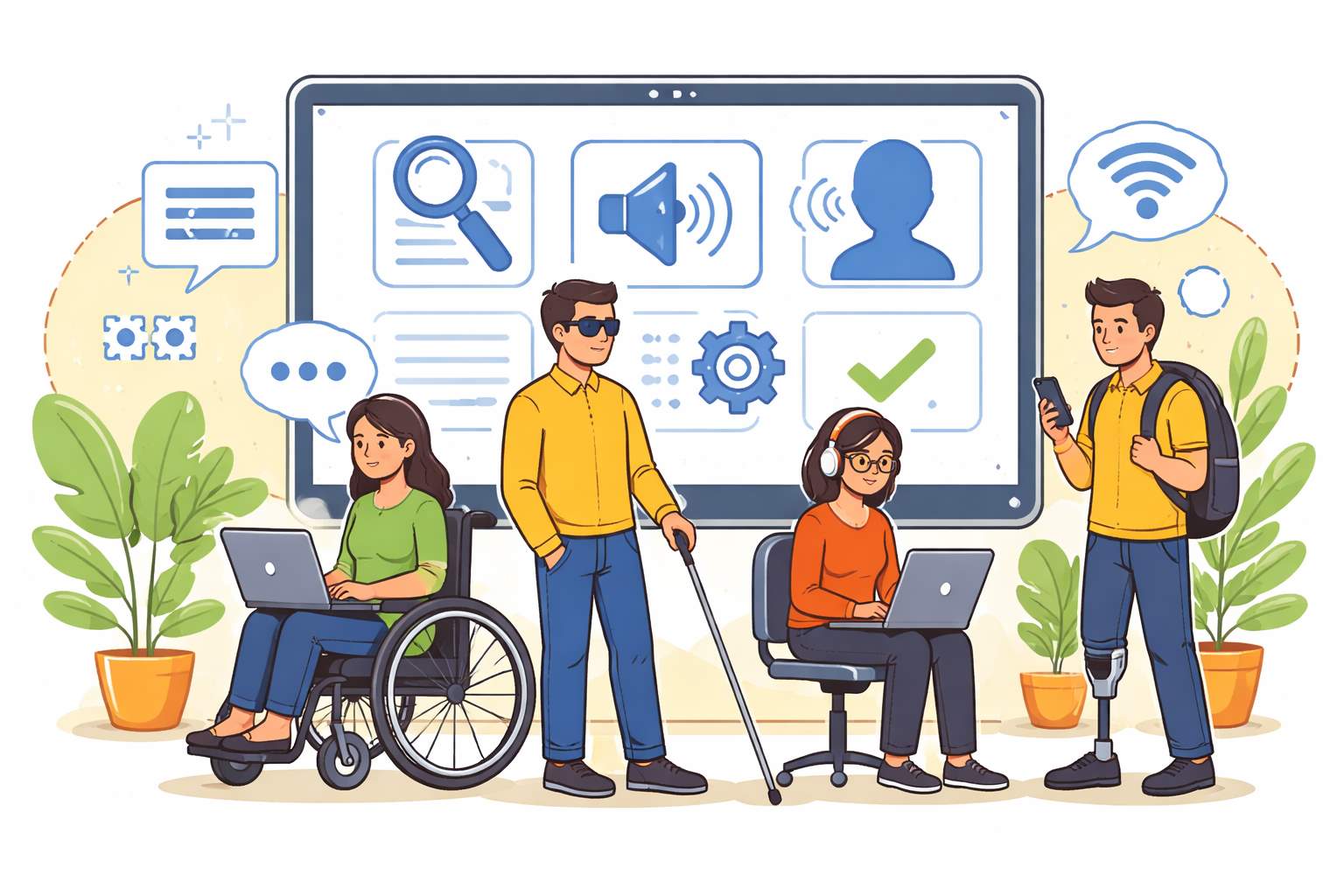
There is a quiet statistic that rarely makes headlines: most of the internet is not built for everyone. For millions of people with disabilities, everyday actions—reading a website, applying for a job, navigating an app—can become frustrating, slow, or simply impossible.
I-Stem begins here. Not with technology for its own sake, but with a simple question: what does it take to make the digital world usable for everyone?
The origin:
I-Stem was founded by Kartik Sawhney and Shakul Sonker, with a mission shaped deeply by lived experience. Sawhney, who is visually impaired, experienced firsthand the lack of accessible systems in education and digital services—both in India and globally.
His journey through engineering education revealed something fundamental. The barrier was not ability; it was access. Universities, platforms, and systems were simply not designed with accessibility in mind.
I-Stem emerged as a response to this gap. From the beginning, the idea was clear: accessibility should not be an afterthought. It should be built into the system.
What I-Stem actually does
At its core, I-Stem is a nonprofit technology platform focused on enabling digital access for people with disabilities (PwDs). But like many impactful “tech for good” platforms, its work sits across multiple layers.
Its flagship platform, “Nclude,” acts as an all-in-one digital hub. It provides accessible content, career discovery tools, job matching, and information on assistive technologies—all designed to work across web, mobile, WhatsApp, and even voice systems.
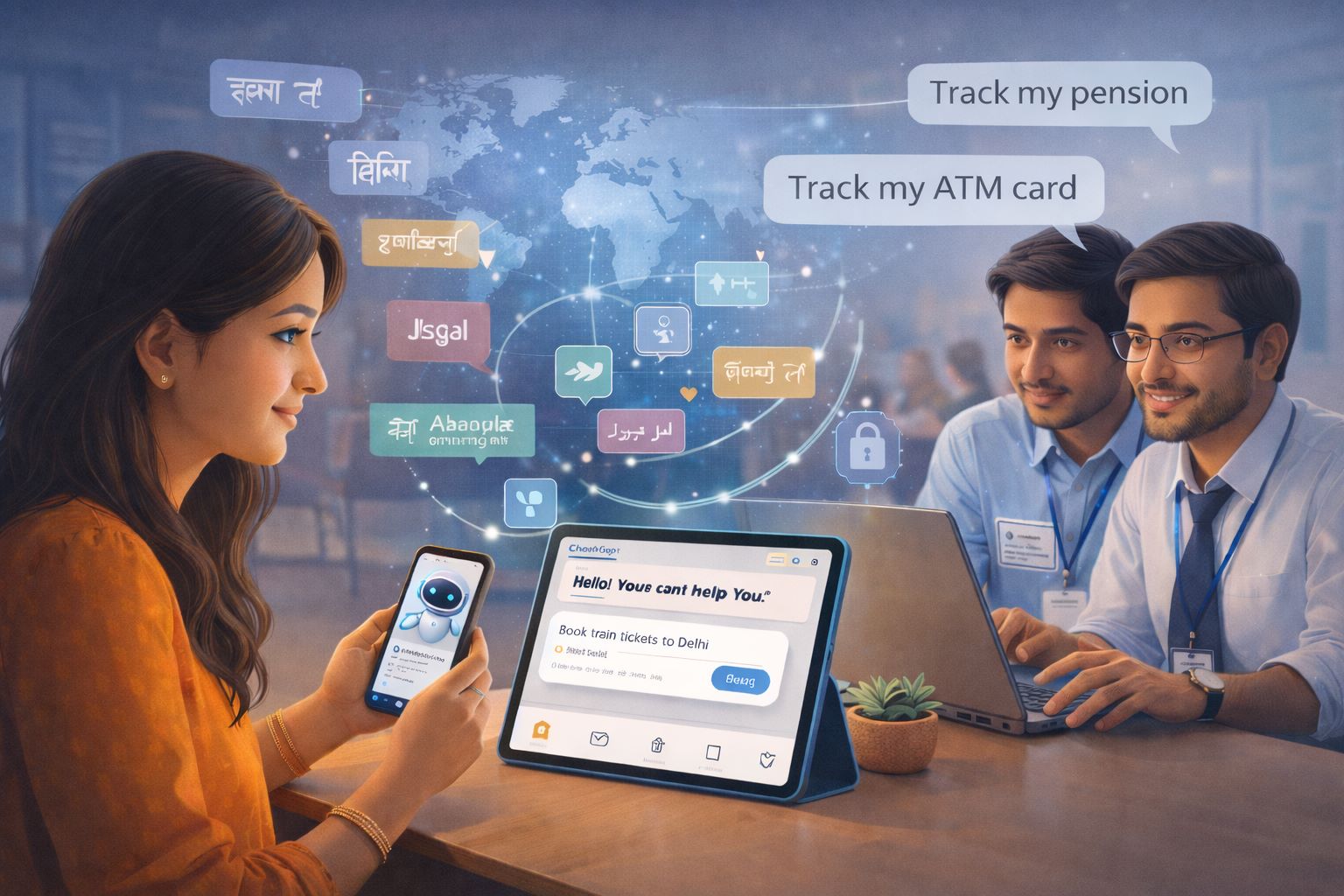
The simplicity here is important. Accessibility is not just about building better apps; it is about meeting users where they are. By using channels like WhatsApp and IVR (interactive voice response), I-Stem ensures that even users with limited digital literacy or device access can participate.
The platform also uses artificial intelligence to make digital content more accessible—whether that is converting text to speech, simplifying navigation, or helping users interact with systems using voice commands.
In essence, I-Stem is building an “access layer” for the internet.
Scale, reach, and early traction
Though still relatively young, I-Stem has demonstrated meaningful scale. The platform has impacted over 50,000 people with disabilities and enabled access to millions of web pages.
It has also facilitated employment pathways, connecting users to jobs and helping generate income opportunities. Tens of thousands of job access instances have been recorded through its ecosystem.
These numbers matter because they reflect something deeper: accessibility is not a niche issue. It is a large, underserved market.
Recognition has followed. I-Stem has been featured in global forums such as the AI for Good Impact Awards, where it was shortlisted for its use of artificial intelligence in enabling inclusion.
The organisation has also received support from global institutions like UNICEF’s Innovation Fund, which backs solutions focused on digital inclusion.
What makes the solution unique
Many organisations work in disability support. What makes I-Stem different is its approach: it treats accessibility as infrastructure, not assistance.
First, it is disability-led. This is not a small detail. The solutions are built by people who understand the problem firsthand, which leads to more practical and usable outcomes.
Second, it focuses on scale through technology. Instead of one-on-one interventions, I-Stem builds platforms that can reach thousands simultaneously.
Third, it integrates multiple needs into one system. Education, employment, accessibility tools, and community are not treated as separate silos but as connected parts of a user’s journey.
Pilots, performance, and feedback
I-Stem’s work is best understood through its use cases.
Students with disabilities use the platform to access learning materials and discover career paths that were previously unclear or inaccessible. Many report that the biggest barrier was not capability, but lack of information—a gap the platform directly addresses.
Professionals use it to find jobs and understand workplace accommodations. Entrepreneurs use it to access networks and resources that were previously out of reach.
There are also integrations with government initiatives like accessibility-focused apps, showing how the platform can plug into larger systems rather than operate in isolation.
Feedback tends to highlight one key theme: empowerment. Users are not just consuming services; they are gaining agency.
Of course, challenges remain. Accessibility is not a one-time fix. It requires continuous updates as technology evolves. There is also the broader issue of awareness—many organisations still do not prioritise accessibility until required to do so.
The broader landscape
Globally, there are several initiatives working on similar themes. Organisations like Stemettes focus on inclusion in STEM education, while various startups build assistive technologies like screen readers or voice interfaces.
However, many of these solutions are fragmented. One tool helps with reading, another with navigation, another with employment.
I-Stem’s approach is to bring these layers together into a single ecosystem.
This is particularly important in emerging markets, where users may not have access to multiple specialised tools.
The global context:
A widely cited statistic suggests that a large majority of the internet remains inaccessible to people with disabilities. At the same time, the world is becoming increasingly digital. Education, jobs, healthcare, and government services are all moving online.
This creates a paradox. Digital systems have the potential to be the most inclusive tools ever created—but only if they are designed that way. Globally, there is growing momentum around accessibility regulations and inclusive design. But enforcement is uneven, and many regions lag behind.
This is where platforms like I-Stem become critical.
- Our Correspondent