HealthPlix was built around a very specific constraint: in India, most patient care still happens in small, independent clinics, and doctors in these settings do not have the time or patience for complex hospital-style software. Any digital system that slows them down simply won’t be used.
Origin
The company was founded in 2014 by Sandeep Gudibanda, Raghav Gupta, and Deepak Reddy. The founding team came from backgrounds in technology and healthcare operations, and they focused early on understanding how consultations actually work in Indian outpatient settings.
Instead of starting with a full hospital management system, they chose to focus on a single moment: the doctor sitting across from a patient, writing a prescription.
In the early years, HealthPlix built and tested an electronic medical record system designed specifically for high-volume outpatient clinics. These are clinics where a doctor may see 40 to 100 patients a day, often with very little support staff. The product had to be fast, lightweight, and usable without disrupting the flow of consultation.
Funding
Funding followed once the product showed repeat usage. HealthPlix has raised capital from investors such as Lightspeed India, JSW Ventures, Chiratae Ventures, and Avataar Venture Partners. The company has used this capital to expand its doctor network, improve product capabilities, and build out a data layer that sits on top of its EMR system.
What does HealthPlix do?
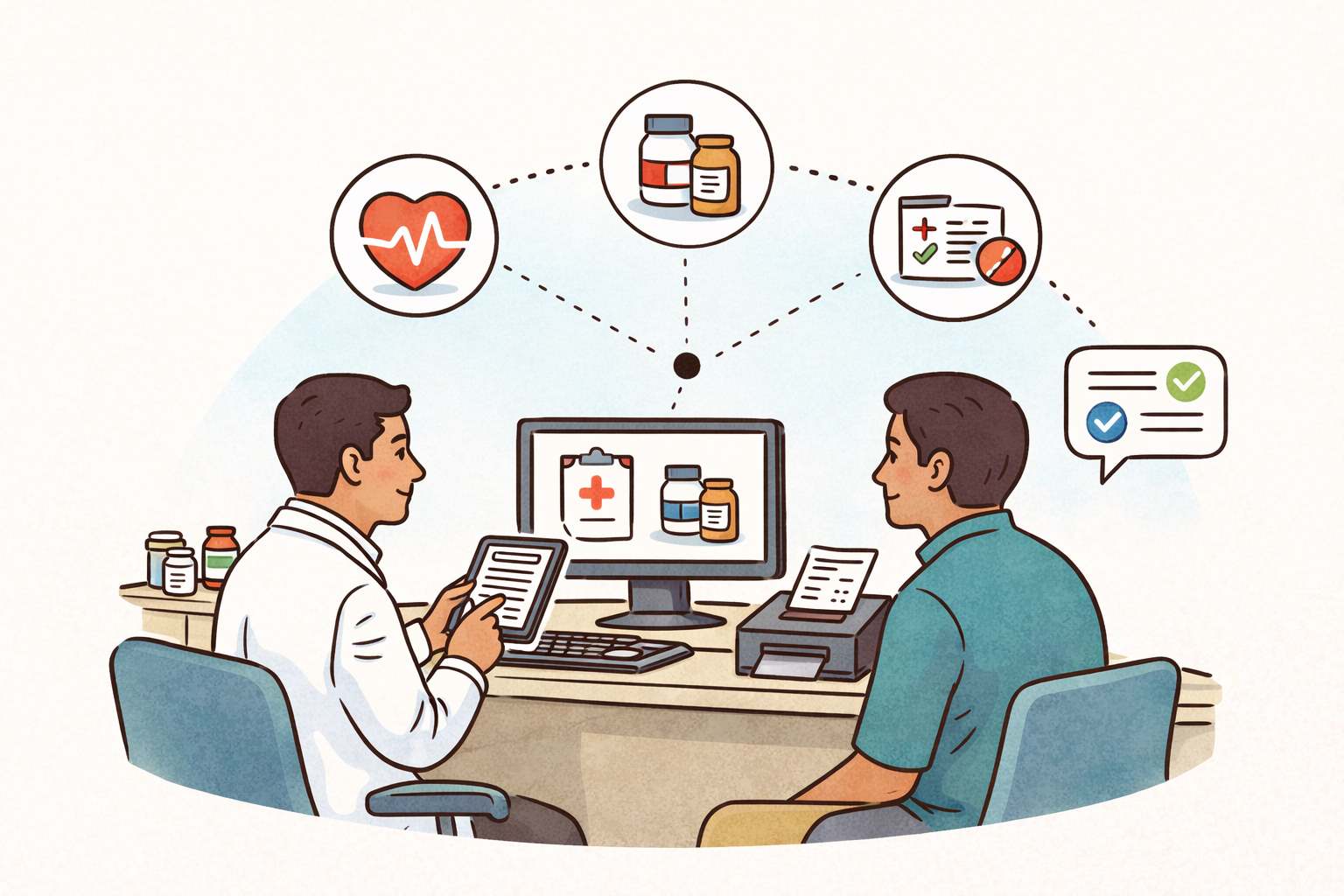
At its core, HealthPlix provides doctors with a digital system to manage patient records, prescriptions, and clinical decisions during consultations. The system replaces paper prescriptions with a structured digital workflow.
When a patient walks into a clinic using HealthPlix, the doctor opens the patient’s profile or creates a new one. Basic details such as age, gender, and symptoms are entered. During the consultation, the doctor selects diagnoses, medicines, and tests from structured menus instead of writing everything manually. The system generates a clean, printed prescription that the patient can take away.
This may sound simple, but the structure underneath is what matters. Each prescription is not just text; it is coded data. Diseases are mapped to standard classifications, medicines are linked to databases, and treatment patterns are recorded in a consistent format. Over time, this creates a large dataset of real-world clinical practice.
The product also includes clinical decision support. For example, if a doctor prescribes a certain drug combination, the system can flag potential interactions or suggest alternatives. It can also provide standard treatment guidelines for specific conditions. These prompts are designed to be subtle and non-intrusive, because anything that slows the doctor down risks rejection.
Another important part of the system is follow-up management. Patients can be tracked over time, and doctors can see previous prescriptions, lab results, and treatment history in one place. This is particularly useful for chronic diseases such as diabetes, hypertension, and asthma, where continuity of care matters.
HealthPlix also integrates with pharmacies and diagnostic labs. Prescriptions can be shared digitally, and lab results can be fed back into the system. This reduces the need for patients to carry physical documents between different providers.
In terms of deployment, HealthPlix has focused on scaling through individual doctors rather than large hospitals. The platform is used by thousands of doctors across multiple cities in India, including general practitioners and specialists such as diabetologists, cardiologists, and pediatricians.
The company reports that it supports millions of patient records and prescriptions annually. In high-volume clinics, the system is designed to reduce consultation time rather than increase it. Doctors who adopt it typically start with basic features and gradually move to more advanced usage as they become comfortable.
Adoption
Adoption has not been uniform. Some doctors resist digital systems altogether, especially older practitioners who are used to paper workflows. HealthPlix addresses this by offering onboarding support and keeping the interface simple. In many cases, assistants or reception staff help with initial data entry, allowing doctors to focus on decision-making.
Feedback from the market suggests that the biggest value for doctors is not just record-keeping, but the ability to standardize and streamline their workflow. Clean prescriptions improve patient understanding, and digital records reduce the risk of losing information. For some doctors, the analytics layer is also useful. They can see patterns in their practice, such as the most common conditions they treat or the medicines they prescribe most often.
From a business perspective, HealthPlix operates on a subscription model for doctors, combined with partnerships with pharmaceutical companies and healthcare organizations. The data layer, when aggregated and anonymized, provides insights into treatment trends, which can be valuable for research and planning.
Differentiation
The company’s differentiation lies in its doctor-first design. Many hospital management systems try to cover everything from billing to inventory to inpatient care. HealthPlix focuses narrowly on the consultation workflow and builds outward from there. This makes the product easier to adopt in small clinics, which form the majority of healthcare access points in India.
There are several other players in the same space. Practo started with doctor discovery and later expanded into clinic management and EMR tools. Docplexus focuses more on doctor networking and education, with some clinical tools. eClinicalWorks and Epic Systems are large global players in electronic health records, but their systems are typically designed for hospitals rather than small clinics.
Global context
Globally, the category HealthPlix operates in is electronic medical records and clinical decision support systems. In developed markets, EMRs are widely used, often driven by regulation and insurance requirements. Systems like Epic and Cerner (now part of Oracle) dominate large hospital networks.
In emerging markets, the challenge is different. Clinics are smaller, less standardized, and more resource-constrained. Software has to work in low-infrastructure environments and adapt to diverse clinical practices. Companies in Africa, Southeast Asia, and Latin America are experimenting with similar lightweight, clinic-focused systems.
What makes India distinct is the sheer volume of outpatient care handled by independent doctors. Any digital layer that wants to scale has to fit into this reality. HealthPlix’s approach of starting with the prescription and building around it is one way of doing that.
Challenges
There are still challenges ahead. Data privacy and regulation are evolving areas in India’s healthcare system. Ensuring that patient data is secure while still being useful is not straightforward. There is also the question of interoperability, where different systems need to talk to each other. Government initiatives around digital health IDs and health records could influence how platforms like HealthPlix evolve.
Another challenge is monetization. Doctors are willing to pay for tools that clearly save time or improve practice, but price sensitivity remains high. Expanding revenue through partnerships and additional services will likely be important.
HealthPlix is not trying to digitize the entire healthcare system at once. It is focused on a narrow but critical layer where most clinical decisions are made. Whether that layer becomes the foundation for a broader ecosystem depends on how consistently it can remain useful to doctors in their day-to-day work.
- Our correspondent