There is a moment that defines the digital economy today. It happens when you try to open a bank account, apply for a loan, or sign up for a service—and the system asks: Who are you?
Answering that question sounds simple. In reality, it is one of the hardest problems in digital systems. Identity has to be verified quickly, accurately, and at scale. It has to prevent fraud, comply with regulations, and still not frustrate the user.
The origin
HyperVerge was founded in 2014 by Kedar Kulkarni, Kishore Natarajan, and Vignesh Krishnakumar. The company began as a computer vision startup, working on image recognition problems.
In its early phase, the team focused on building strong AI models—particularly in facial recognition and image analysis. But like many deep-tech startups, the turning point came when they found a real-world use case that needed this capability at scale. That use case was identity verification.
As digital services grew—especially in banking, fintech, telecom, and e-commerce—companies faced a common bottleneck. Verifying a user’s identity was slow, manual, and prone to fraud. HyperVerge shifted its focus to solving this problem.
What HyperVerge does
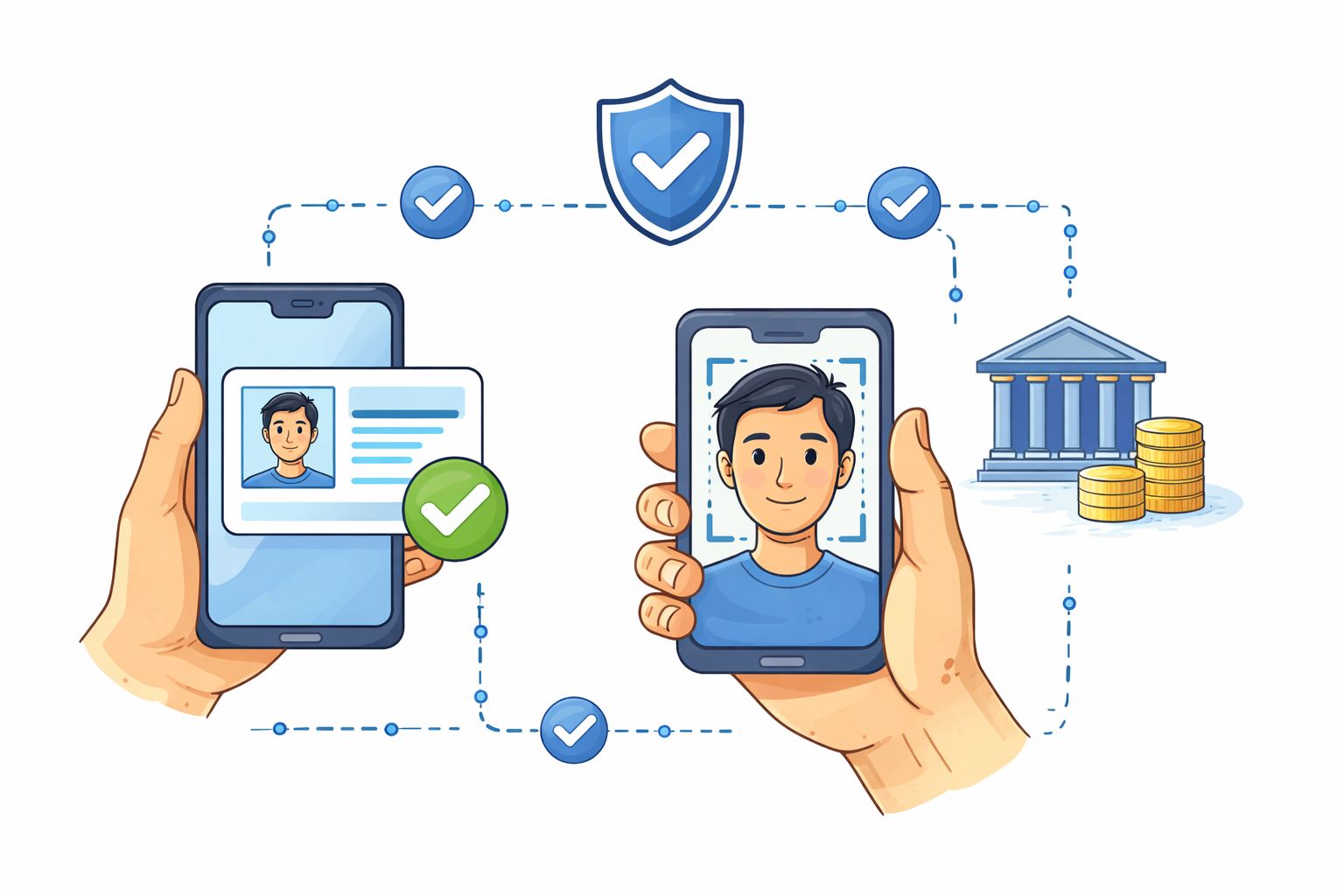
At its core, HyperVerge is an AI-powered identity verification platform. But instead of thinking of it as a single tool, it helps to see it as a pipeline. When a user signs up for a service, they typically upload an ID (like Aadhaar, PAN, passport) and take a selfie. HyperVerge processes this information in real time.
First, it extracts data from the document using OCR (optical character recognition). This means reading text from images automatically.
Second, it checks whether the document is genuine. The system looks for signs of tampering, forgery, or manipulation.
Third, it matches the selfie with the photo on the ID using facial recognition.
Fourth, it performs a “liveness check.” This ensures that the person is physically present and not using a photo, video, or deepfake. All of this happens in seconds. The output is simple: verified or not verified.
Why this matters
Before systems like HyperVerge, identity verification was manual. A human agent would review documents, check photos, and approve or reject applications. This took time and introduced errors. With HyperVerge, the process becomes automated. Verification time drops from hours to seconds. Manual errors reduce. Fraud detection improves.
For a business, this directly affects growth. Faster onboarding means more users complete the process instead of dropping off midway.
The product stack
Over time, HyperVerge has expanded beyond basic identity checks. Its platform, often referred to as HyperVerge ONE, includes multiple modules. There is identity verification, which handles document and face checks. There is video KYC, where users can be verified remotely via live interaction. There are fraud detection systems that flag suspicious behaviour. There are compliance tools for AML (anti-money laundering) and regulatory checks.
The platform also includes orchestration tools—meaning businesses can design their onboarding flows without heavy engineering work.
This matters because identity verification is not a one-size-fits-all process. Different industries and geographies have different requirements.
Scale, funding, and growth
HyperVerge has scaled significantly over the past decade. The platform has verified over a billion identities globally and serves more than 200 enterprise clients. Its customers include banks, fintech companies, telecom providers, and digital platforms.
In terms of funding, the company has raised around $1 million in early-stage investment and has also been supported by accelerator programs and strategic investors.
While this may seem modest compared to some startups, HyperVerge’s growth has been driven more by product adoption and enterprise revenue than heavy capital infusion.
Performance and real-world outcomes
The impact of HyperVerge’s system is best understood through operational metrics. Its verification systems can process identity checks in under a few seconds. Accuracy levels are reported to be above 99%. In one case, a lending platform reduced onboarding time to around 10 seconds using HyperVerge’s document validation tools.
These improvements are not just technical. They directly affect conversion rates—how many users complete signup—and operational costs.
What makes the approach unique
There are many identity verification companies globally. What distinguishes HyperVerge is how it combines speed, scale, and adaptability.
First, it is built for high-volume environments. Systems are designed to handle millions of verifications with low latency.
Second, it focuses on reducing friction. Many verification systems add steps, which leads to drop-offs. HyperVerge aims to minimise steps while maintaining accuracy.
Third, it integrates multiple checks into one flow. Instead of separate tools for OCR, face recognition, and fraud detection, it combines them.
Fourth, it is designed for emerging markets. This means handling diverse ID formats, low-quality images, and variable connectivity.
Market feedback and challenges
The market response has been strong, especially in fintech and digital services.
However, the space is highly competitive. Identity verification is also a sensitive domain. It involves handling personal data, which requires strict compliance with privacy laws.
There are also concerns around bias in facial recognition systems.
The global landscape
HyperVerge operates in a global category often referred to as “identity infrastructure.” Competitors include companies like Jumio, Veriff, Sumsub, and Shufti Pro. These companies provide similar services—document verification, biometric authentication, and fraud prevention.
What differentiates players in this space is not just technology, but reliability, compliance, and geographic coverage.
HyperVerge in the “tech for good” context
HyperVerge’s work may not look like traditional “impact” technology, but its role is foundational.
By enabling remote identity verification, it expands access to financial services. People who cannot visit physical branches can still open accounts or access credit.
It reduces barriers to participation in the digital economy.
- Our correspondent