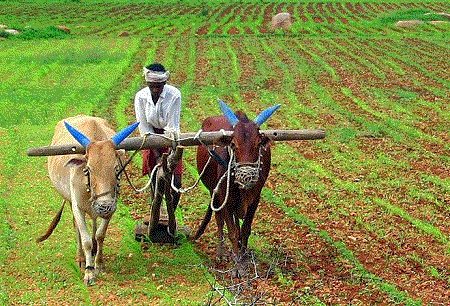
Farming has always involved guesswork.
When should you irrigate? How much water is enough? Will a disease spread in the next few days? Most farmers rely on experience, intuition, and fragmented information to make these decisions.
Sometimes that works. Often, it does not. Fasal is built around a simple idea: what if farming decisions could be made using data instead of guesswork?
The origin:
Fasal was founded in 2018 by Shailendra Tiwari and Ananda Verma, both of whom came from farming backgrounds and had first-hand experience of the uncertainty in agriculture.
Interestingly, the company did not begin as a startup idea. The founders were experimenting with growing crops themselves and ran into practical challenges—unpredictable weather, pest attacks, and inefficient irrigation.
These were not abstract problems. They were daily decisions with financial consequences. That experience led to a key realisation: farmers were not lacking effort—they were lacking reliable, real-time information. Fasal was created to fill that gap.
What Fasal does
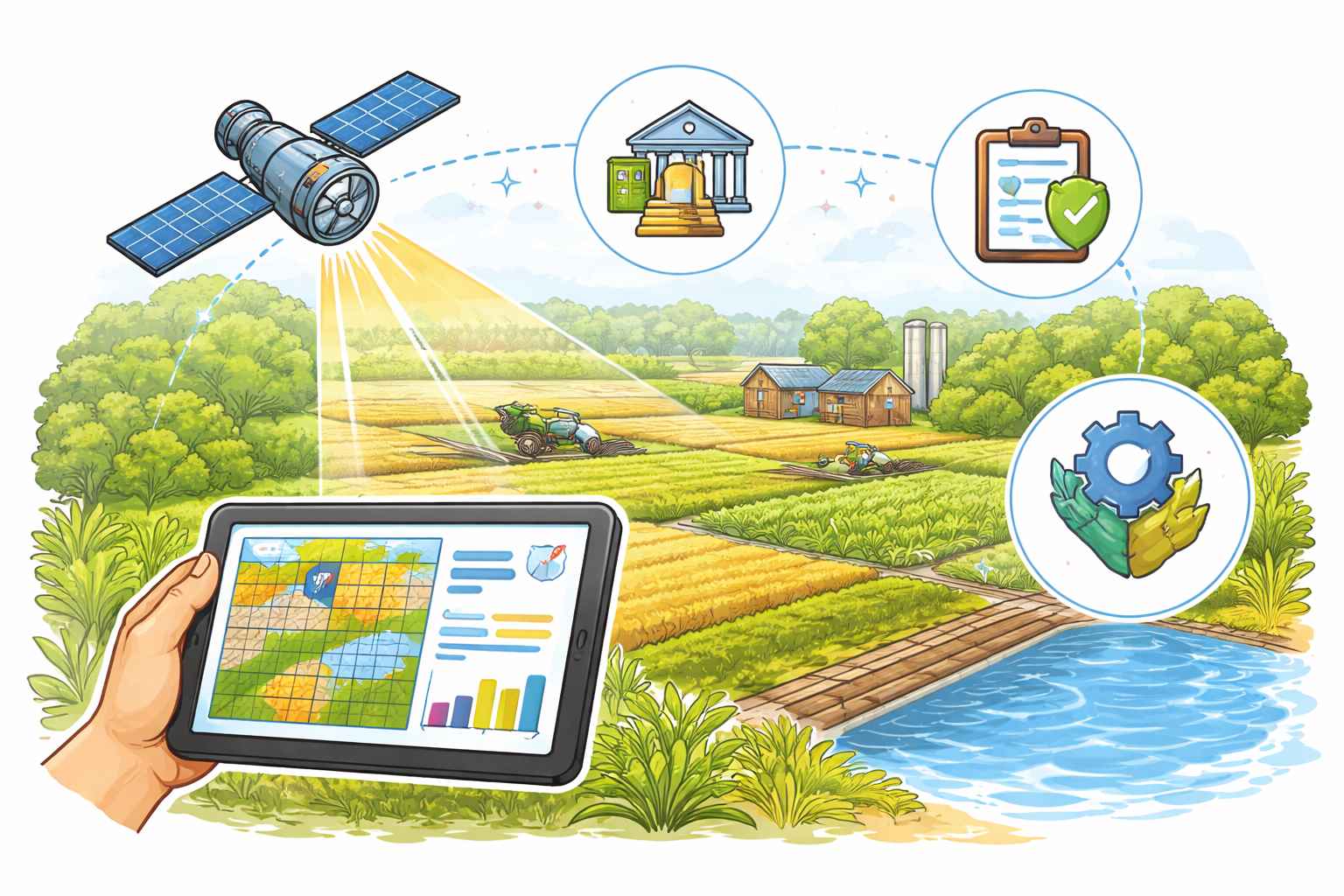
Fasal is an AI-powered precision agriculture platform. At its core, it collects data from farms, analyses it, and gives farmers specific instructions on what to do. But the system becomes clearer when broken down.
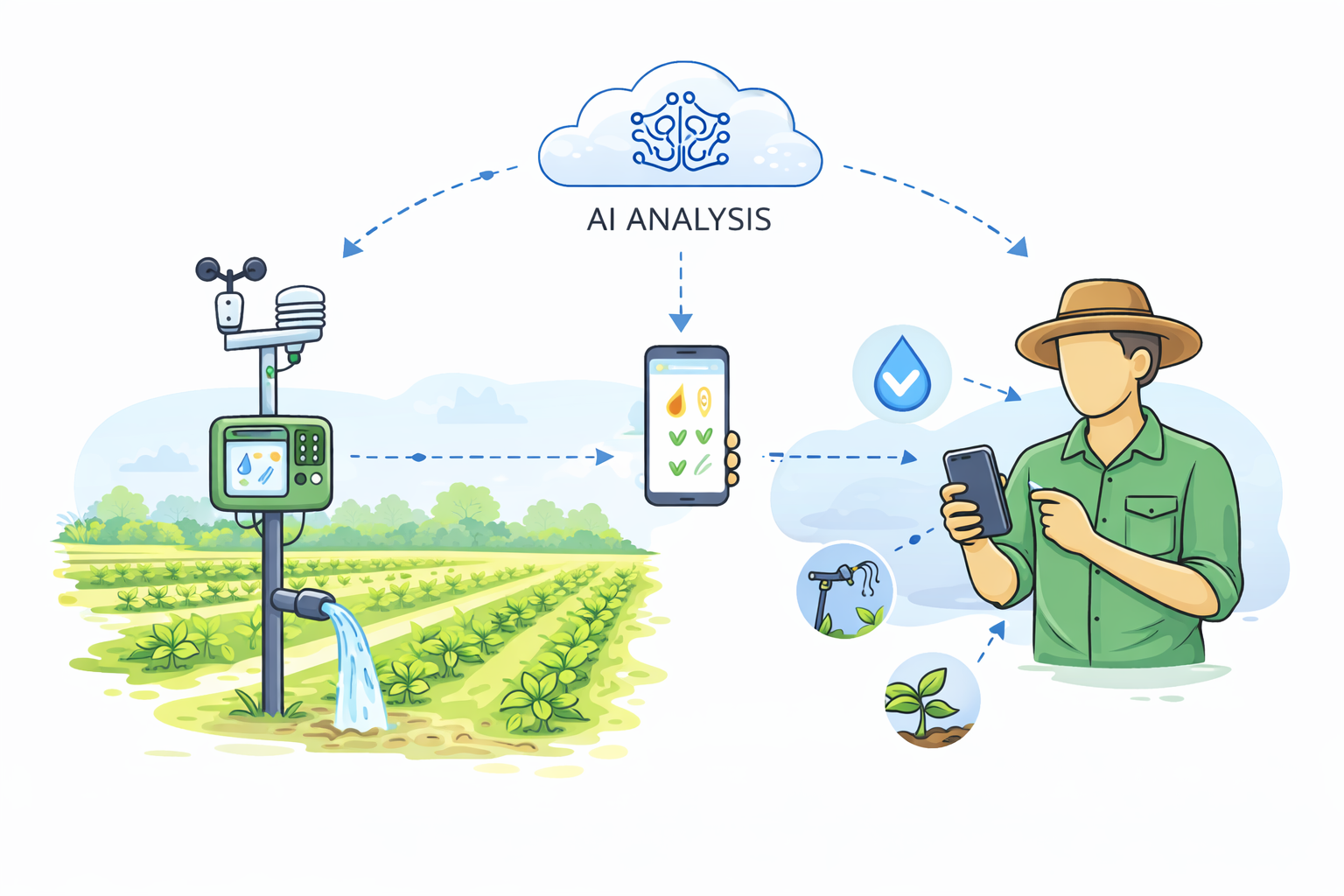
Fasal installs devices called Fasal Sense on farms. These are IoT sensors that measure conditions like: soil moisture, temperature, humidity, rainfall and wind patterns. This data is combined with weather forecasts and crop science models.
The platform then uses artificial intelligence to generate actionable advisories.
For example: when to irrigate, how much water to use, when to spray pesticides
what disease risks are emerging. These recommendations are delivered to farmers through a mobile app. So instead of guessing, farmers follow data-driven guidance.
How the system works
You can think of Fasal as a continuous loop. First, the sensors measure what is happening on the farm. Second, the system analyses this data using models and algorithms. Third, it converts analysis into simple instructions. Fourth, the farmer acts on those instructions. Fifth, the system learns from outcomes and improves over time. This loop repeats every day.
Over time, farming becomes more predictable.
What changes for farmers
Before Fasal, decisions are reactive. A farmer sees crops drying → irrigates
Sees pests → sprays Sees damage → reacts. After Fasal, decisions become predictive. The system can warn about disease before it spreads.
It can suggest irrigation before stress appears. It can optimise input usage instead of overuse. The result is not just better crops, but more efficient farming.
Farmers using the system have reported: lower water usage, reduced pesticide costs and higher yields.
Beyond advisory
Fasal has also expanded beyond advisory into what it calls a full-stack model. Traditionally, farmers grow crops and sell them into fragmented markets. Fasal connects the production side with the market side. Through its platform, it sources produce directly from farmers using its system and sells it as traceable, high-quality output under its B2B brand.
This creates a feedback loop: better farming → better produce → better market access. It also allows buyers to know how crops were grown, which is increasingly important in global supply chains.
Scale and adoption
Fasal has grown steadily across India’s horticulture sector. The company has deployed around 10,000 sensor devices across farms. Its technology now covers tens of thousands of acres and supports a growing network of farmers.
The platform is particularly focused on high-value crops like fruits and vegetables, where precision has a direct impact on quality and pricing.
Funding and growth
Fasal has raised funding across multiple stages. It started with a $1.6 million seed round backed by Omnivore and Wavemaker Partners. It later raised $4 million in pre-Series A funding led by 3one4 Capital. In 2023, it raised around ₹100 crore (~$12 million) in Series A funding, led by TDK Ventures and British International Investment.
What makes the approach unique
There are many agritech startups. Fasal’s differentiation comes from how it combines multiple layers. First, it focuses on precision horticulture, where small improvements create large economic gains. Second, it builds a closed-loop system—from sensing to decision to execution. Third, it provides crop-stage-specific insights. Advice changes depending on where the crop is in its lifecycle. Fourth, it integrates hardware, software, and agronomy into one platform. Fifth, it connects farm-level data with market outcomes, moving beyond just advisory.
Performance and real-world outcomes
The impact of Fasal’s system is visible in practical metrics. Water usage can drop significantly because irrigation becomes precise rather than excessive. Pesticide usage reduces because spraying is done only when needed. Crop quality improves due to better timing of interventions.
The global context
Fasal operates in the broader space of precision agriculture. Globally, this is a growing category where data, sensors, and AI are used to optimise farming.
In developed markets, similar systems exist, often focused on large-scale mechanised farms. Fasal’s approach is different because it is built for small and mid-sized farms, especially in emerging markets.
- Our correspondent