eVerse AI is not a generic AI company. It sits deep inside the dairy and livestock economy, building tools that work directly with farmers, animals, and carbon markets.
Its focus is narrow but operationally heavy: improving how cows are managed, while also turning livestock emissions into measurable climate outcomes.
The company was founded in 2022 and operates out of India, with roots in Nagpur and a growing presence internationally.
eVerse.AI was started by Ashish Sudam Sonkusare along with Vidhi Gaur and other early team members who come from a mix of engineering, agriculture, and climate backgrounds.
The starting point was a practical observation. Dairy farming in India and other markets runs on thin margins and fragmented data. Farmers often make decisions about animal health, breeding, and nutrition based on experience rather than real-time information. At the same time, livestock is a major contributor to methane emissions, but measuring and managing that at scale has been difficult.
eVerse AI was built to address both sides of this problem together: productivity and emissions.
Funding
The company has largely been bootstrapped so far, with limited external funding. It has relied on founder capital and some grants, while generating revenue through deployments.
Product
At the core of eVerse AI’s product stack are two systems: ConnectedCow and GreenCow.
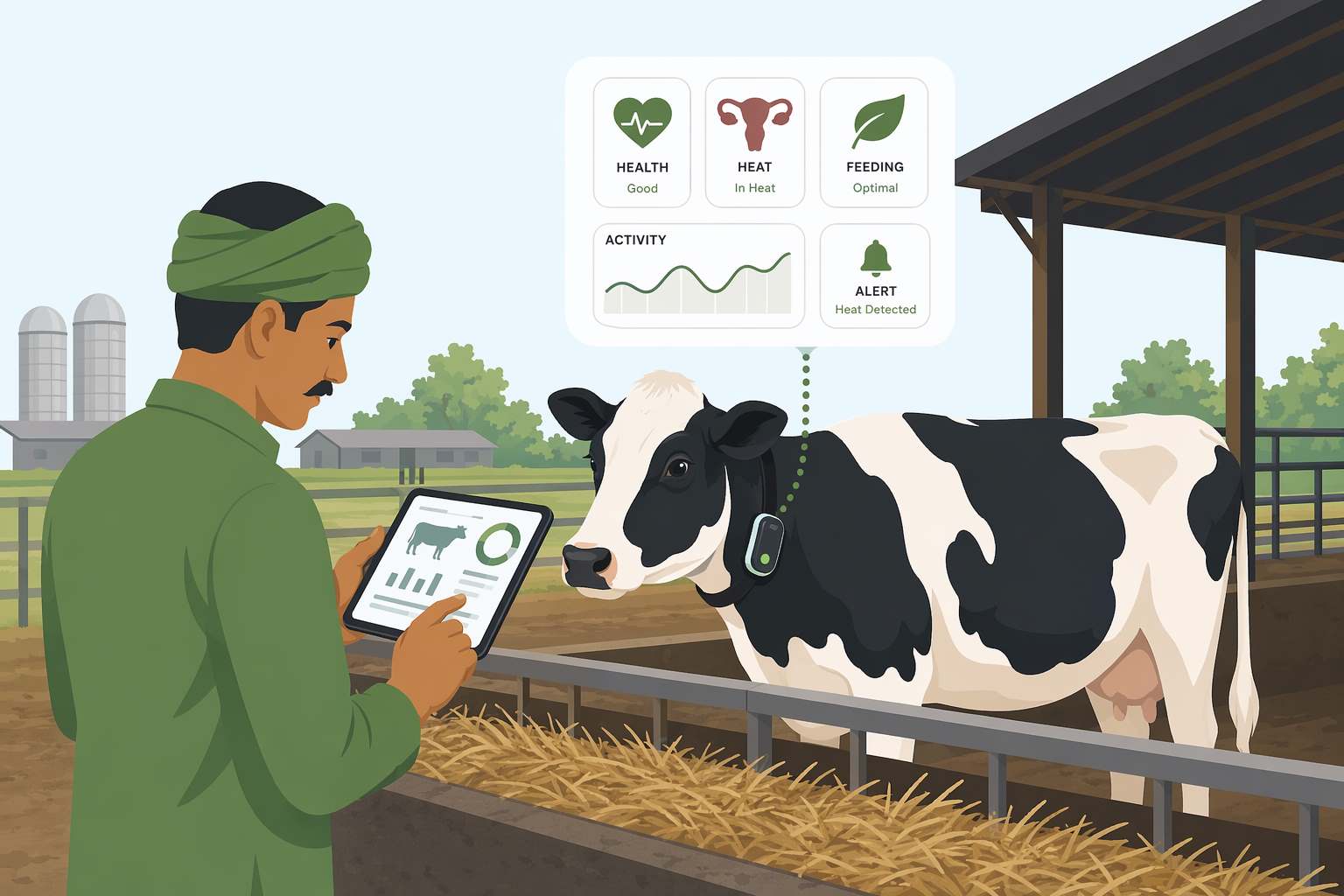
ConnectedCow is a hardware-plus-software system that works like a monitoring layer for livestock. Farmers attach wearable devices, typically collar-based sensors, to cows. These devices track movement, activity, and physiological signals. The data is transmitted continuously and analysed using machine learning models.
From this, the system can detect events such as heat cycles, health anomalies, or changes in feeding behaviour. For example, if a cow’s activity suddenly drops, it can indicate illness. If activity spikes in a specific pattern, it may signal readiness for breeding. These are decisions that farmers traditionally make manually, often with delays.
eVerse AI’s system translates this raw sensor data into simple, actionable alerts. Instead of dashboards full of metrics, the output is closer to: “this animal may be sick” or “this is the right time for insemination.”
The company claims high accuracy levels for some of these detections, especially around breeding cycles, which are critical for dairy productivity.
On top of this sits CowGPT, a generative AI system designed specifically for livestock management. Unlike general-purpose chatbots, CowGPT is trained on veterinary and farm-specific data. A farmer or field worker can ask questions about symptoms, nutrition, or breeding, and receive contextual guidance.
This matters in markets where access to veterinary expertise is limited. Instead of waiting for a vet visit, farmers can get immediate suggestions, which can then be validated or escalated if needed.
The second major layer is GreenCow, which focuses on methane emissions. Livestock methane is one of the largest contributors to agricultural emissions globally, but measuring it at the level of individual farms has been difficult.
Everse AI approaches this by combining sensor data, feeding patterns, and animal activity with modelling systems to estimate methane output. This is part of a broader system known as MRV—measurement, reporting, and verification—which is essential for carbon markets.
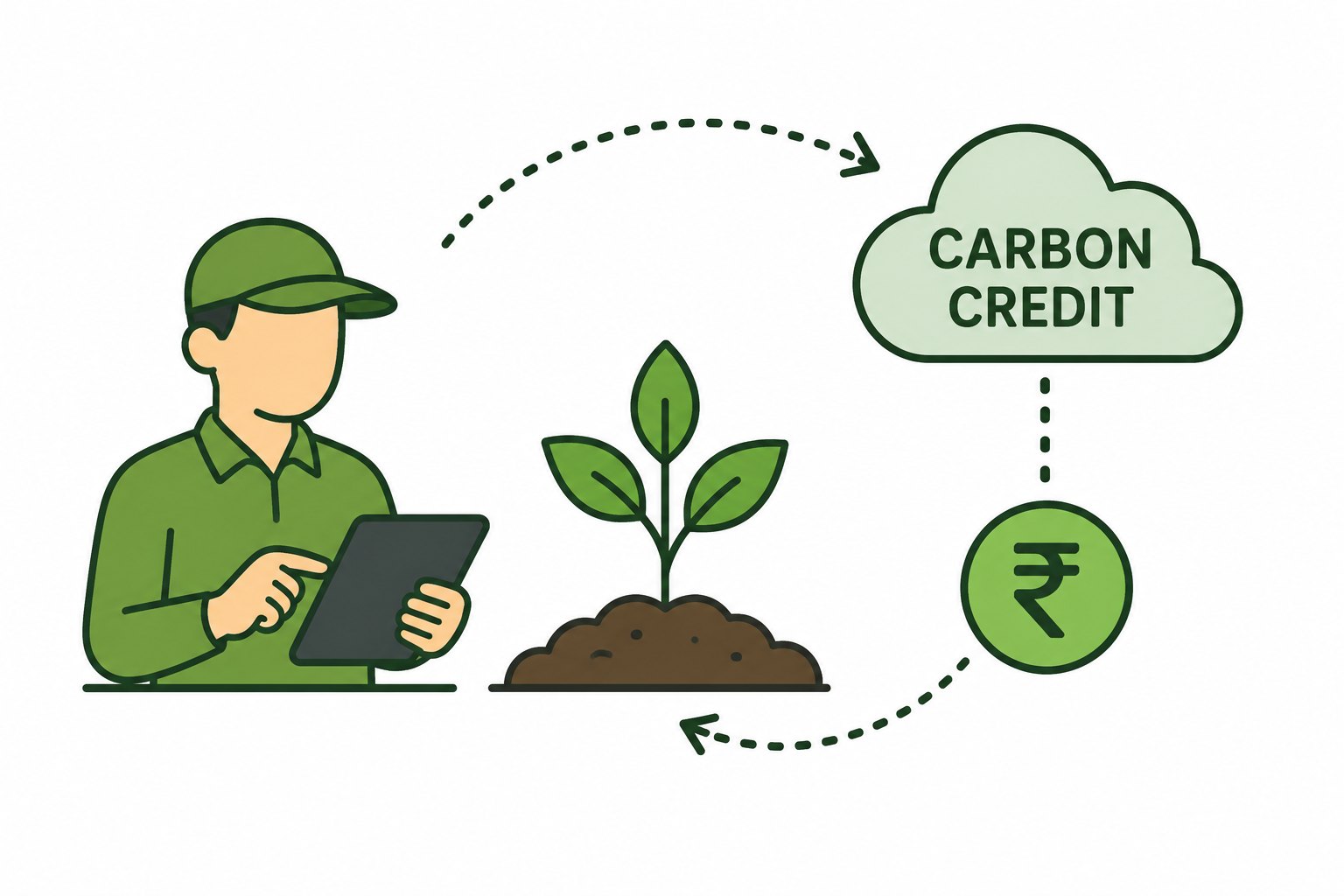
In simple terms, the company is trying to create a system where a farmer’s actions—such as improved feed or better herd management—can be translated into quantifiable emission reductions. These reductions can then potentially be turned into carbon credits.
This is where the model extends beyond farm productivity into climate finance.
eVerse AI is not just selling devices. It is trying to build an end-to-end pipeline: monitor animals, improve productivity, reduce emissions, measure those reductions, and connect them to carbon markets.
Deployment
The company has already deployed its systems in dairy farms in India, including pilot projects that integrate sensors, analytics, and farmer training. It also runs programs to help farmers understand and use the technology, which is necessary given the complexity of both the hardware and the data layer.
One of its larger ambitions is to run methane reduction projects at scale. The company has indicated work on what it describes as one of the largest livestock methane reduction initiatives, suggesting a move toward aggregated, multi-farm deployments.
The early feedback from the field has been shaped by usability and economics. Farmers care about outcomes they can see quickly—milk yield, animal health, and cost savings. Climate benefits, while important, are secondary unless they translate into income.
eVerse AI’s model tries to align these incentives. Better animal health leads to higher productivity. Better management leads to lower emissions. If carbon markets mature, those emissions reductions could become an additional revenue stream.
However, there are real challenges. Hardware deployment in rural environments is not trivial. Devices need to be durable, affordable, and easy to maintain. Data connectivity can be inconsistent. Farmer adoption depends heavily on trust and local support.
There is also the question of carbon markets. While the idea of monetising methane reduction is attractive, the infrastructure for verifying and trading such credits is still evolving, especially in developing markets.
Global context
eVerse AI operates in a broader category that sits at the intersection of agri-tech, climate tech, and IoT. Globally, there are companies working on precision livestock farming, such as sensor-based monitoring systems in Europe and Israel. There are also startups focused on methane reduction through feed additives or genetic improvements.
What is relatively distinct about Everse AI is the attempt to combine three layers into one system: animal monitoring, farmer decision support, and carbon measurement.
This integrated approach is still early as a category. Most companies operate in one layer. Few are trying to connect farm-level data directly to climate finance mechanisms.
In India, the opportunity is large. The country has one of the world’s largest livestock populations, and dairy is a critical source of rural income. At the same time, emissions from livestock are significant, but largely unmeasured at the farm level.
Globally, there is increasing pressure to reduce agricultural emissions, especially methane. Governments, corporations, and climate funds are all looking for ways to do this without disrupting food systems. This creates space for companies that can deliver measurable, scalable solutions.
eVerse AI is still early in its journey, but it is building in a part of the economy that is both operationally complex and economically important. Its success will depend less on AI sophistication and more on execution—getting devices onto farms, ensuring they work reliably, and aligning incentives across farmers, buyers, and carbon markets.
- Our correspondent