Neoperk is one of those startups that begins with a very specific technical problem and slowly expands into something much larger.
At first glance, it is a soil testing company. Look closer, and it becomes a story about how data moves—or fails to move—through Indian agriculture.
Origins
Neoperk began around 2018–19, when Satyendra Gupta and his peers, then engineering students, were working on a problem for an innovation challenge. They were not from farming families, and agriculture was not an obvious starting point. But when they looked for real-world problems that combined scale and neglect, soil testing stood out.
India already had large programmes like the Soil Health Card scheme. On paper, the system existed. In practice, it struggled. Soil samples had to be collected, transported to labs, tested using chemicals, and then sent back as reports. This process could take days or weeks. By the time farmers received the results, the sowing window might have already passed.
This gap—between data collection and usable action—became the starting point for Neoperk.
The company was formally incorporated in 2019. But instead of rushing into product deployment, the team spent time in villages, particularly across Maharashtra, trying to understand how soil testing actually worked on the ground. What they found was not a lack of awareness, but a lack of usability. Farmers either did not trust the reports or found them too slow and too technical to act on.
That insight shaped the company’s direction. Neoperk would not just build a testing device. It would try to rebuild the entire flow—from data collection to decision-making.
Founders and early backing
Neoperk was founded by Satyendra Gupta, with early contributions from a small team of engineers and collaborators.
The company’s early support came less from venture capital and more from institutional ecosystems. It was incubated at places like NSRCEL at IIM Bangalore and supported by initiatives linked to IITs and the Department of Science and Technology.
The product
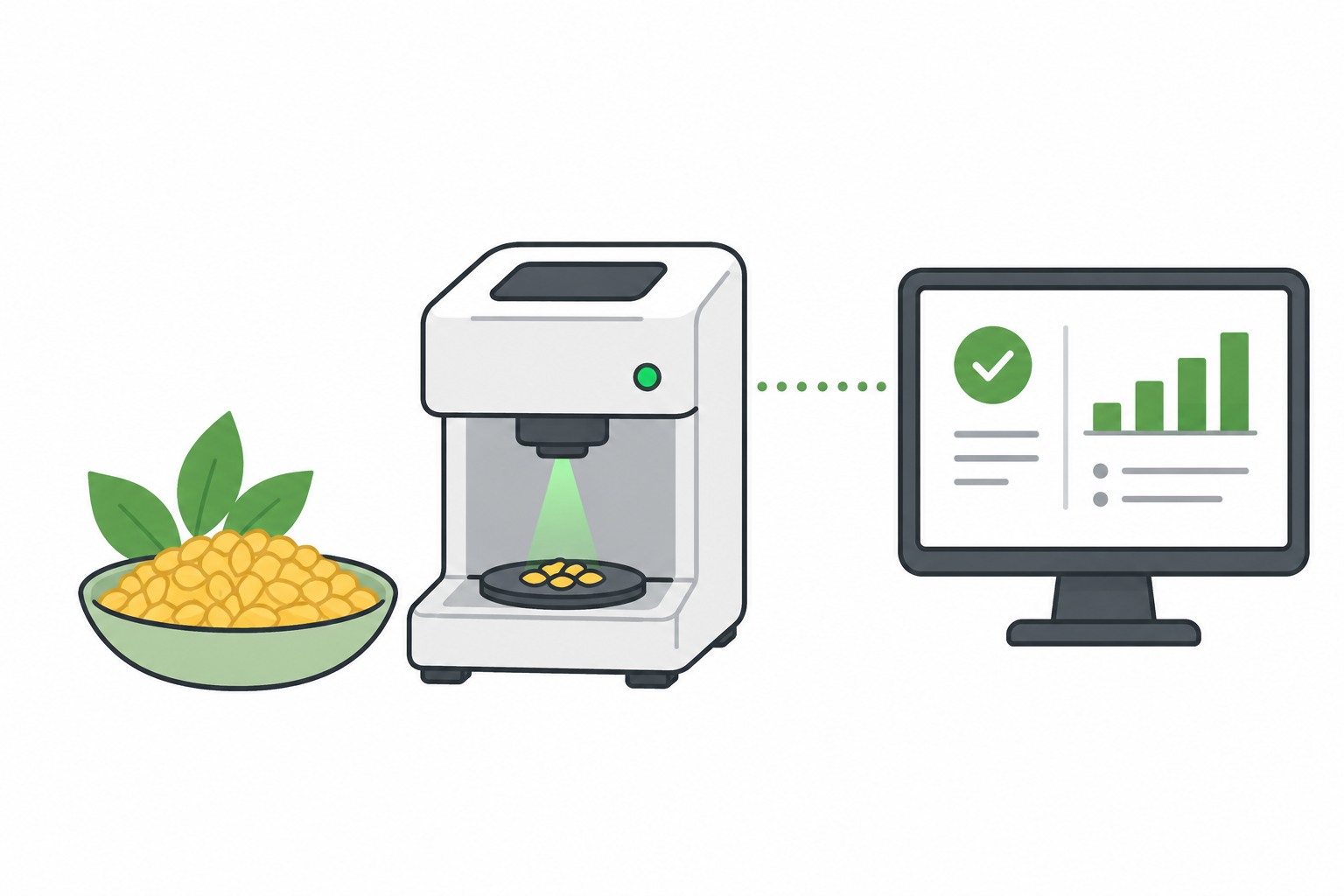
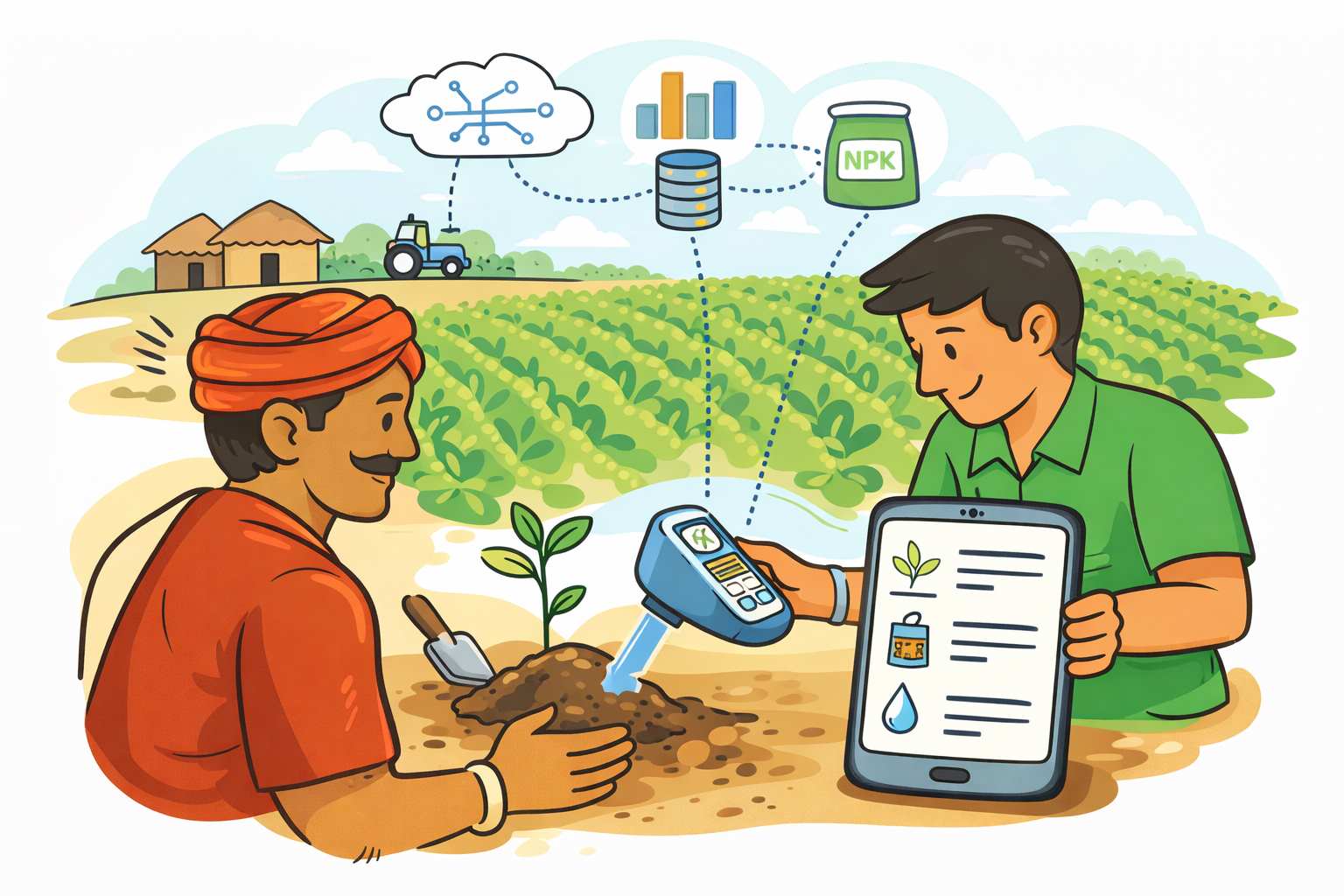
At the centre of Neoperk’s offering is a portable, chemical-free soil testing system. Instead of relying on traditional wet chemistry, the device uses near-infrared spectroscopy—a method that analyses how light interacts with soil to determine its composition.
In simple terms, instead of sending soil to a lab, the analysis can happen on-site. A field operator can scan the soil and generate results within minutes.
This matters because timing is everything in farming. A recommendation that arrives late is often useless, even if it is accurate.
The company combines this hardware with software. Data from the device is processed using machine learning models and then translated into recommendations—how much fertiliser to use, what nutrients are lacking, and how to manage the soil better.
Over time, Neoperk has expanded this into a broader system. It now includes data collection tools, analytics dashboards, and advisory layers that connect soil data to real decisions in the field.
What stands out is that the product is not just about measurement. It is about making the measurement usable.
What makes the approach different
Soil testing itself is not new. What Neoperk changes is how it is delivered and integrated.
First, speed. Traditional soil testing can take days. Neoperk’s system reduces this to minutes. That alone shifts how farmers can use the data.
Second, accessibility. The device is portable and can be deployed in villages without lab infrastructure. This removes one of the biggest barriers in scaling soil testing.
Third, cost structure. By eliminating chemicals and lab processes, the system becomes more affordable and scalable.
Fourth, integration. Instead of handing over a report, Neoperk tries to connect data to action. This includes advisory services and integration with agri-input decisions like fertiliser use.
There is also a strong emphasis on validation. The technology has been tested and validated by institutions like ICAR-NBSS & LUP in Nagpur, which adds credibility in a domain where trust is critical.
Pilots, deployments, and performance
Neoperk has worked across multiple Indian states, including Maharashtra, Karnataka, and Gujarat. Its deployments often happen through partnerships—with NGOs, farmer producer organisations, and agri-businesses.
One example is its work with farmer groups where soil testing is integrated into broader agricultural programmes. In such settings, the value is not just in testing but in enabling better fertiliser use and crop planning.
The company’s sensors and systems have been deployed across thousands of acres, generating large datasets on soil health. Farmers using these systems have reported improvements in crop yield and more efficient use of inputs.
An important part of the model is training. Neoperk does not simply provide devices; it trains field teams on how to collect samples correctly and interpret results. This is critical because poor data collection can undermine even the best technology.
Market feedback tends to revolve around practicality. The biggest advantage cited is speed and ease of use. Farmers and partner organisations value the ability to get actionable insights quickly, rather than waiting for lab reports.
At the same time, the company faces the classic challenge of agritech: adoption takes time. Farming decisions are influenced by habit, risk, and local context. Even when data is available, changing behaviour requires trust and repeated use.
Comparable models in India and globally
Neoperk operates in a growing category of precision agriculture tools. In India, companies like DeHaat and CropIn focus on broader farm management and advisory systems, while others provide satellite-based insights or input marketplaces.
Globally, soil intelligence is an active area of innovation. In the United States, companies use in-ground probes for continuous monitoring. In Europe, handheld scanners perform rapid soil analysis.
What differentiates Neoperk is its focus on portability and field deployment in smallholder contexts. Many global solutions assume large farms and higher capital availability. The Indian context requires something more flexible and cost-sensitive.
There is also a shift happening globally towards data-driven agriculture. Sensors, satellites, and AI models are increasingly being used to guide farming decisions. Soil data is a foundational layer in this stack.
- Our correspondent