Agriculture has always depended on scale. More land, more labour, more inputs—more of everything to increase output.
But over time, this approach has created its own problems. Chemicals are overused. Costs keep rising. Labour is harder to find. And yet, much of what is applied in the field is unnecessary.
Niqo Robotics starts with a simple observation. Farms do not need more input. They need more precision.
The origin:
Niqo Robotics was founded in 2015 by Jaisimha Rao in Bengaluru. The company was originally known as TartanSense and began with an interest in using drones for agricultural spraying. But early field experiments changed that direction.
When the team spent time on farms, they realised that aerial solutions were not always practical for Indian conditions. Crops vary widely, terrain is uneven, and costs need to stay low.
The insight was clear. Farmers needed something closer to the ground—literally. This led to a shift toward building ground-based robotic systems that could operate directly within farms, adapting to real-world conditions rather than ideal ones.
Over time, the company rebranded as Niqo Robotics and expanded its focus to precision farming tools.
What Niqo Robotics does
Niqo Robotics builds machines that can see crops and act selectively.
In traditional farming, spraying is uniform. A farmer sprays an entire field, even though weeds or pests may affect only a small portion. Niqo’s systems change this.
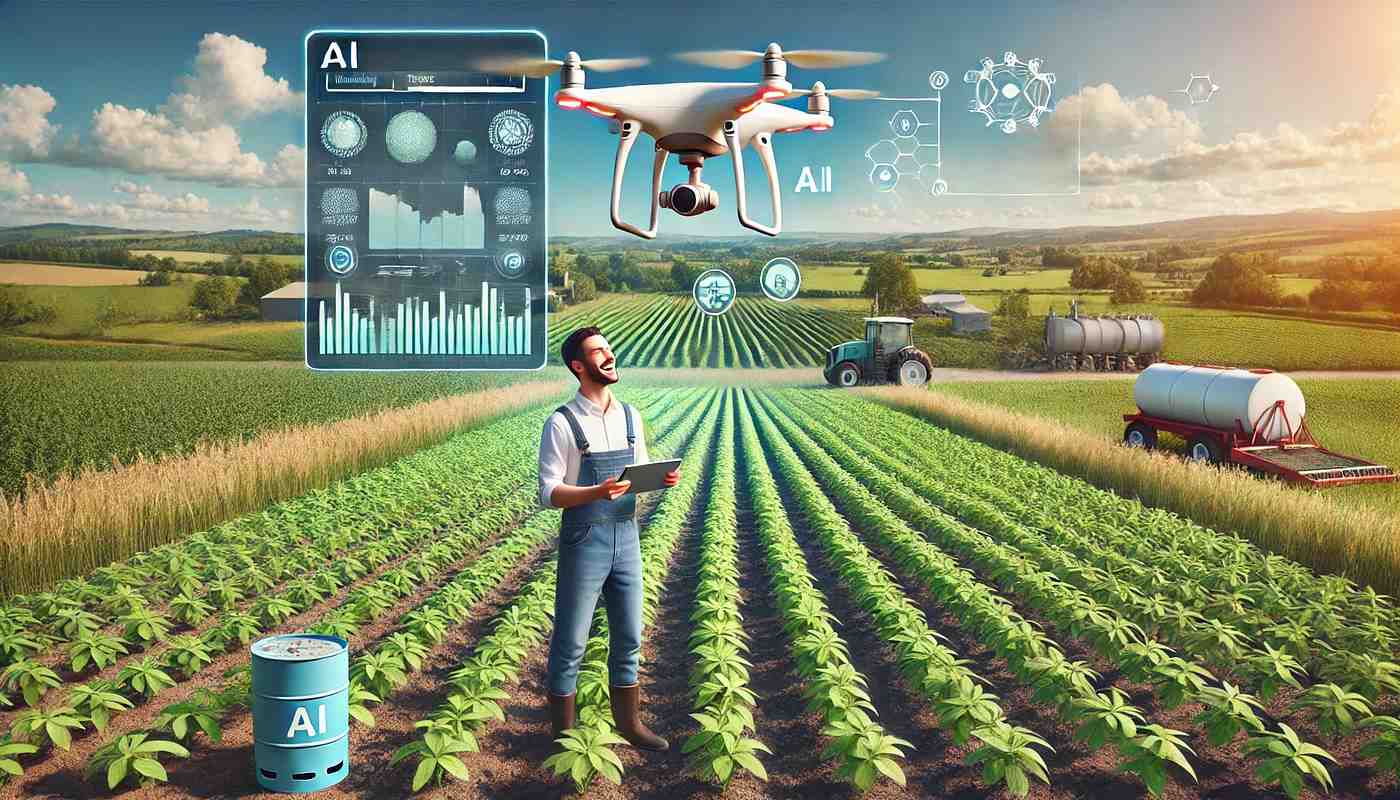
Using computer vision, their machines scan the field in real time. They identify what is a crop and what is a weed. Based on this, they apply chemicals only where needed. This is often described as “see, select, spray.”
Their key products include systems like RoboSpray and RoboWeeder, which automate spraying, weeding, and thinning tasks. At the heart of these machines is a proprietary vision system that allows them to distinguish plants at a very granular level.
How the technology works
The working principle can be broken down into three steps. First, cameras capture images of the field continuously as the machine moves. Second, software processes these images and identifies different types of plants—crops versus weeds. Third, the system activates nozzles to spray only the targeted plants.
This happens in real time, without stopping. Instead of treating the field as a uniform surface, the machine treats it as a collection of individual plants.
This shift—from uniform action to plant-level action—is what defines precision agriculture.
What changes on the farm
Before systems like this, spraying is broad and inefficient. Farmers may use 100–150 litres of chemical solution per acre, even though only a small fraction of the field actually needs treatment.
After deployment, the process becomes selective. Only affected plants are treated. The rest of the field is left untouched. This leads to measurable outcomes. Chemical usage drops significantly—often by 50 to 60 percent. Costs reduce because less input is used. Soil health improves because excess chemicals are avoided. Farmers also spend less time on repetitive tasks. These are operational changes, not theoretical ones.
Scale and deployment
Niqo Robotics has moved beyond early pilots into real-world deployments. Its systems are used across India and have expanded into markets like the United States. The company reports working with over 3,000 farmers and covering large areas of farmland. In terms of scale, the technology has been applied across over 100,000 acres, with continued expansion.
This level of deployment is important because agricultural technology only proves itself when it works consistently across different crops and environments.
Funding and growth
Niqo Robotics has raised significant funding as it scaled. In 2024, it raised around $13 million in a Series B round, with investors including Brida Innovation Ventures, Fulcrum Global Capital, and Omnivore. This brought its total funding to over $20 million.
Product evolution
Niqo’s product journey reflects a gradual expansion of capabilities. It started with early robotic prototypes for spraying. Then moved to retrofit solutions, where its technology could be attached to existing farm equipment. This reduced the need for farmers to invest in entirely new machines.
More recently, the company has expanded into multi-function systems that can perform several tasks—such as weeding, thinning, and spraying—in a single pass. This evolution shows a shift from single-task automation to integrated farm operations.
What makes the approach different
Niqo Robotics stands out for a few specific reasons. It focuses on precision rather than scale. Instead of increasing input, it reduces unnecessary input. It builds systems that work with existing equipment, making adoption easier. It is designed for real-world farm conditions, not controlled environments. It combines robotics, vision systems, and field data into a single workflow.
And it targets high-frequency tasks like spraying, where even small efficiency gains create large impact.
The global context
Niqo Robotics operates within the broader field of precision agriculture and agricultural robotics.
Globally, there is growing interest in using machines to optimise farming inputs—water, fertilisers, and chemicals. Many solutions are being developed in regions like the US and Europe, often focused on large-scale mechanised farms.
Niqo’s approach is notable because it originates in a smallholder context and then expands outward. Its systems are designed to work in diverse and less predictable conditions, which makes them adaptable across markets.
In practice, it turns farming from a broad operation into a more precise one—one plant at a time.
- Our correspondent